


Inside Korea: Discovering the People and Culture (Bilingual Korean and English edition | 양장본 Hardcov
Description
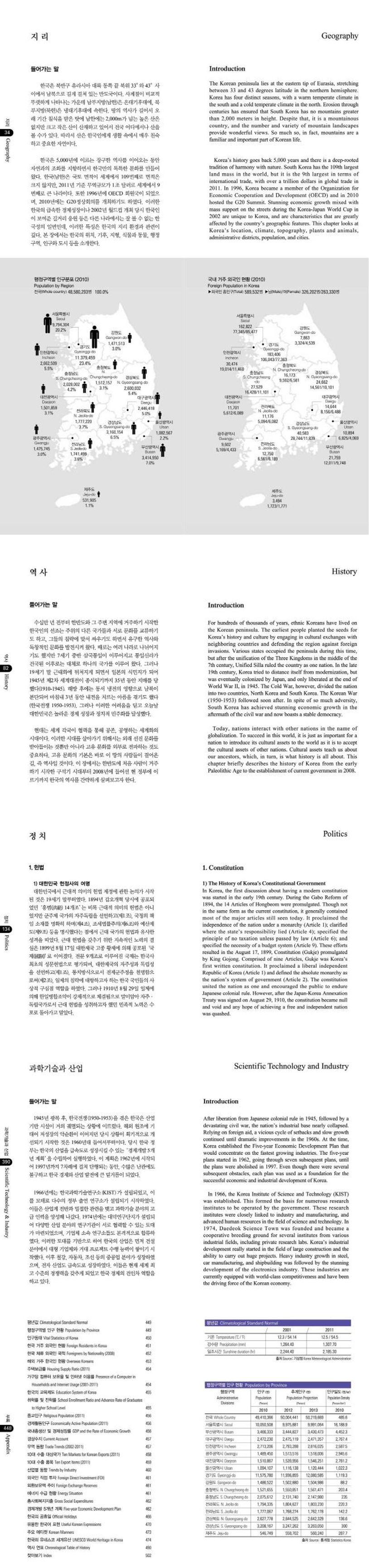
What’s Inside Korea?
Discovering the past and Present of Korea
Korea is a nation with about five thousand years of history and rich cultural heritage and a country realized stunning economic growth and democratic development in such a short span of time. In addition, Korea has recently been put on the proverbial global map propelled by the Korean wave which hit the world, but the country is still far from well-known across the world. What is Korea like? In fact, it is not easy for both Koreans and non-Koreans to answer to this question. It is where the idea of this book first created.
This book is designed to increase understanding about Korea for people around the world and to present Korean society and culture in refined manner to foreigners who are not familiar with. Most of the information in the book can be easily accessed through the Internet, but books are still the best method to systemize information on such a broad subject and to make it understandable to a wider range of people regardless of time or place. That being said, this book has a great deal to offer people around the world.
This book mainly consists of three parts. The first part (pp. 1-32) offers a brief introduction to Korea with reliable barometers in many aspects of Korean identity. The main part (PP. 33-446) of this book reveals Korea by eight categories: geography, history, politics, economy, society, culture, religion and religious culture, and scientific technology and industry. Two special commentaries on the North-South relations and East-West cultural differences are to help readers better understand Korea as a “divided country” with “Confucian culture.” Finally the last appendix part contains a lot of statistic information that readers can refer to.
한국은 어떤 나라인가?
분야별로 살펴 보는 한국의 어제와 오늘
최근 전세계적인 ‘한류’에 힘입어 세계적으로 한국에 대한 관심이 높아져 가고 있지만, 한국은 5,000년의 유구한 역사와 문화적 전통을 바탕으로 짧은 기간 안에 경제성장과 민주화를 이룩해 낸 나라임에도 불구하고, 여전히 세계적으로 많이 알려져 있지 않은 국가이다. 한국은 어떤 나라일까? 한국에 대해 잘 알지 못하는 외국인의 입장에서도, 한국인으로서 살아가는 한국인의 입장에서도 이 질문에 대한 답을 하기는 힘들다. 이 책의 기획은 바로 이 질문에서 시작되었다.
현대는 원하는 정보를 언제 어디서나 찾아볼 수 있는 스마트 시대이지만, 지리에서부터 역사, 정치, 경제, 사회, 문화 등의 전반을 정리된 형태로 보기는 어려운 것이 현실이다. 이에 따라 한국에 관한 정보를 체계적으로 정리하고 찾아보기 쉬운 형태로 보여줌으로써 한국인뿐만 아니라 외국인도 한국에 관하여 원하는 정보를 보다 쉽게 찾아볼 수 있도록 구성하게 되었다.
이 책은 총 세 개의 파트로 구성되어 있다. 머리말을 포함하는 앞부분에서는 한국이 어떤 나라인지를 개괄적으로 알 수 있도록 위치, 면적, 인구, 평균연령, 소비자물가지수, GNP 등과 같은 객관적인 데이터 중심의 자료를 수록하고 있다. 이 책의 가장 중요한 부분이라고 할 수 있는 본문 파트에서는 지리, 역사, 정치, 경제, 사회, 문화, 종교와 전통문화, 과학기술과 산업을 각각의 챕터로 하여 한국의 지정학적 특징과 이를 기반으로 한 역사적, 문화적, 사회적, 정치적 변화와 발전과정을 살펴본다. 아울러 ‘남북관계의 이해’와 ‘동서양 문화 비교’라고 하는 두 개의 특집 기고문을 본문 중간에 삽입하여 한국이라는 나라가 분단국가라는 특수한 상황에 놓여 있고 서양문화와는 다른 문화적 특징이 있는 나라라는 점을 바탕으로 한국을 보다 잘 이해할 수 있도록 하였다. 마지막으로 부록을 두어 본문을 이해하는 데 도움이 될 만한 다양한 참고자료를 수록하고 있다.
Inside Korea: Discovering the People and Culture (Bilingual Korean and English edition | 양장본 Hardcov
$15.64