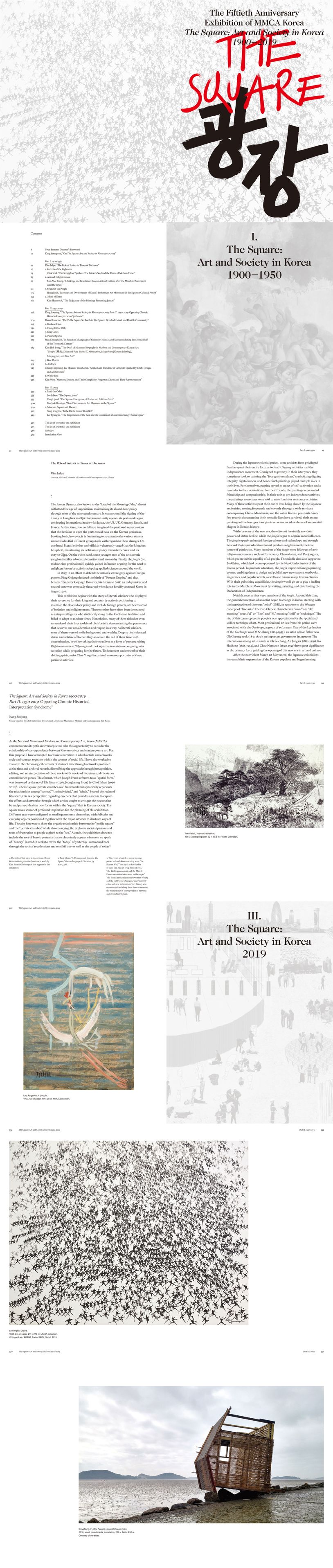
이책은국립현대미술관개관50주년기념도록〈광장:미술과사회1900-2019〉의영문판이다.국립현대미술관의지난50년의기록을글과이미지로담아역사적전시의현장성을생생하게전달한다.
HeldatMMCADeoksugung,PartIconsiderstheroleandrelationshipofKoreanartwiththeliberationmovementduringtheJapanesecolonialperiod.Consideringtheoverallthemeofhowhistoricalconditionsinfluencetheartofagivenera,thispartisdividedintofoursections:“RecordsoftheRighteous,”“ArtandEnlightenment,”“SoundofthePeople,”and“MindofKorea.”“RecordsoftheRighteous”recallstheindividualswhofoundtheirownwaystobravelyupholdthenation’shonorandautonomyduringJapan’sinitialencroachmentintoKoreaandeventualcolonialrule:literatischolarswhovehementlyassertedtheneedtomaintainConfuciantraditionandtheisolationistpolicy;membersoftheresistancemilitia;peoplewhoriskedeverythingtojointhefrontlineoftheindependencemovement;peoplewhochosetogointohidingtonurturefuturegenerations;andthemartyrswhomadetheultimatesacrificebygivingtheirlifetothecause.ThroughChaeYongshin’smagnificentportraitsofthesepatriots,aswellastheirownexcellentworksofcalligraphyandpainting,thissectionlooksbackathowthethwarteddreamofbuildinganautonomousmodernstateledtoresistanceactivitiesanddreamsofenlightenment.Thisleadstothenextsection,“ArtandEnlightenment,”whichpresentseducationalresources,illustrationsfromnewspapersandmagazines,andworksbytheGaehwapa,agroupdedicatedtothereformandempowermentofKorea.VisitorscanalsotracethechangingcoverageofindependenceactivitiesinartmagazinespublishedbeforeandaftertheMarch1stMovementof1919.“SoundofthePeople”reviewshowvariousinternationalarttrendswereintroducedthroughposters,magazines,andprints,whilealsoexaminingKorea’srelationswithglobalsocialistandproletariatartmovements.Notably,thissectionincludesworksbyPenVarlenandYimYongryun,twomasterartistswhowereexiledfromtheirhomelandduetocolonialrule.Finally,“MindofKorea”presentsworksbythepioneersofKoreanmodernart,suchasLeeQoede,KimWhanki,andLeeJungseob,showinghowtheirpassionforlifeandattitudetowardsartshonethroughtheirart,evenduringtimesofthedarkestdespair.
AlthoughmanyofKorea’sfirstmoderncitieshadpublicsquaresfromthetimeoftheirestablishment,thecontemporaryconceptofthesquarehadnotyetariseninthisperiod.Intheearlytwentiethcentury,thesocialandpoliticalroleofthesquarewastypicallyfilledbythestreetsormarketplacesinstead,wheremostpeoplemetandconversed.However,theartistsandfreedomfighterswhoresistedthelossofnationalsovereigntyandstruggledtoenactaneweraneverabandonedthecollectivismofapublicspacefortheindividualismofthebackroom.Thereweremanypossiblepathsbetweenthebackroomandthesquare:somewerenarrowandwinding,somewerewidestraightboulevards,whileothersledtoadeadend.Butnomatterwhichpaththeychose,theywereheadedtowardsthe‘square’offreedomandliberation,sharingthesamevisionofrestoringKorea’sidentityandautonomy.
HeldatMMCAGwacheon,PartIIdealswiththeeraofmodernization,democratization,andglobalization,fromtheKoreanWartothepresent.Ratherthanastraightchronologicalpresentation,thisparthasamixedarrangementtoallowfortheintersectionandcoexistenceofthebackroom,street,andsquare.Tohighlighttheoverarchingthemeoftheexhibition,thetitleofeachsectionisbasedonkeywordsfromChoiInhun’snovelTheSquare.Inparticular,thispartinvokesChoi’ssymbolicandmetaphoricaluseofcolor,especiallyblack,gray,blue,andwhite.Thedisplaysaredividedintoatotalofsevensections:sixtotherightofthemainrampandonetotheleft.Thesixsectionsontherightare“BlackenedSun”,“Han-gil(OnePath)”,“GrayCaves”,“PainfulSparks”,“BlueDesert”,“AridSea”Inaddition,therightsideincludesasquarededicatedtotheMay18UprisinginGwangju.Finally,thesectionontheleftis“WhiteBird,”aspaceformourningandplacingawreath.Visitorsareencouragedtomovefromrighttoleft,followingaroughlychronologicalpathfromthe1950stothepresentwiththesquareinthecenter.
Focusingonthe1950s,“BlackenedSun”beginswithworksbyJeongjuAnandKangYo-baedepictingwoundsfromtheKoreanWarandtheNorthSouthdivision.Next,“Han-gil(OnePath)”exploreshowtherapideconomicdevelopmentofthe1960swasinstigatedbythemilitaryregime’simperiouspushforprogressandrestoration,prioritizingnationalproductionattheexpenseofindividualfreedomandexpression.Byenforcingauniformstandard,themilitarygovernmenteffectivelydenouncedboththebackroom(individualfreedom)andthesquare(autonomyofcommunity).FeaturingabstractworksbyChungKyu,YooYoung-Kuk,andKimChongYung,andexperimentalworksbyKimKuLimandLeeKun-yong,thissectionalsoincludesseparatecornersforYunIsangandLeeUngno,bothofwhomwereimprisonedforideologicalconflicts.“GrayCaves”revisitsthe“gray”periodofthe1970s,whenKoreacontinueditsincredibleeconomicgrowth,evenwhilesufferingfromextremesocialoppressionundertheYushinregime.InthenovelTheSquare,the“graycave”wasabackroomwhichbecametheonlyrefugewhereprotagonistYiMyeongjunandhisloverEunhyecouldhide.Thisperiod,whenKoreanswereforcedtoremaininthebackroomandcouldnotenterthesquare,isrepresentedbyhyperrealistworks,documentarypaintingsoftheVietnamWarbymilitarycorrespondentartists,and“Dansaekhwa”(“Koreanmonochrome”)paintingsbyParkSeo-Bo,HaChongHyun,andYunHyong-keun.
“PainfulSparks”isbasedonapoliticalgatheringina